Ongoing and completed third-party funded projects
Nazi aftermath, reorientation and international networks: Austrian socio-cultural anthropology in the post-war period up to 1965
Founded in 1929 by the two Steyl missionaries Wilhelm Koppers and Wilhelm Schmidt, the Institute of Ethnology (today Department of Social and Cultural Anthropology) at the University of Vienna became the largest and most important institution for ethnology in the German-speaking world in the post WWII period. The aim of this research project is to systematically examine Austrian socio-cultural anthropology with its numerous interdisciplinary connections and international networks in the period from 1945 to 1965 for the first time. The research project comprises three work packages to which a total of nine research topics are assigned. The questions and hypotheses include the transformation of central networks, the main protagonists and their lasting achievements as well as markers in the history of ideas. The first work package deals with the “legacy” of the Nazi past but also with Catholic networks and pioneering appointments to chairs at the Institute of Ethnology in Vienna. The second work package is dedicated to international networks. Here, the outstanding importance of conferences and research funding institutions (e.g. UNESCO, Wenner-Gren Foundation) for Austrian socio-cultural anthropology is highlighted and examined. Finally, the third work package deals with interdisciplinary cooperation (e.g. prehistoric archaeology, Japanese studies, Anthropos institutes in Asia), the renewal of ethnographic film and biographical examples of scholars from Austria making an international career in this field. Theoretically, the project follows in the tradition of US anthropology’s historian George W. Stocking, who explicitly favours biographical, institutional and historical contextualization over presentist approaches. Epistemologically and methodologically, a source analysis is pursued that combines the approaches of historical anthropology with those of contemporary history for anthropological historiography. Archival research will be carried out in Austria, Italy, Germany, France, UK and in the USA. In addition, secondary contemporary witnesses will be interviewed with the help of standard interviews. The scientific correspondence kept in a private archive in Rome can be estimated at over twenty thousand folios. On the basis of these archive sources, completely new questions can be developed in conjunction with other private and state archives. The high density of correspondence will make it possible not only to write a diachronic history of the Vienna Institute in the narrower sense, but also to carry out synchronic studies on international networks and interdisciplinary connections, which will provide a completely new picture of socio-cultural anthropology in Austria during the post-war period up to the 1960s.
| Duration | 2026-2030 |
| Research group | Peter Rohrbacher (University of Vienna) |
| Short description | FWF - Fund for the Promotion of Scientific Research Individual project funding |
Staying Connected: Everyday Lives of Online English Teachers in Serbia and Bosnia and Herzegovina
This study delves into the complex subjectivities and desires of online English teachers in Serbia and Bosnia and Herzegovina, situated within the context of the Western Balkans' shifting migration trends and the rise of the gig economy. The study utilises the theory of everyday life combined with Gilles Deleuze's philosophy of desire, Michel Foucault's insights into subject formation, and the concept of the new economy. Through a multidisciplinary approach, combining ethnographic, ethnopsychoanalytic, and semiotic methodologies, this research examines how these teachers' desires and pleasures intersect with their everyday experiences, emotional labour, and subject formation. It explores how online English teaching, as a form of gig work, affects their sense of self, identity, and belonging, and how it influences their decisions to remain in their home countries while participating in the globalised digital labour market. By analysing the macro and micro perspectives, this research sheds light on the external influences shaping these teachers' desires and subjectivities, including public discourses, media narratives, and government policies. It also investigates the emotional labour involved in online English teaching, the commodification of their skills and identities, and the impact of these processes on their well-being and sense of self. Ultimately, this research aims to contribute to a deeper understanding of the evolving landscape of language teaching, the gig economy, and (non)migration patterns in the Western Balkans, while providing novel insights into the complex relationships between desire, pleasure, and subjectivities in the digital labour market.
| Duration | 2026-2029 |
| Research group | Jelena Košinaga |
| Short description | FWF - Fund for the Promotion of Scientific Research - ESPRIT programme line Individual project funding |
nice* - Micro-interventions for a gender-equitable #city
As part of the Elisabeth-List-Fellowship for Gender Studies
Central aim of the LIST network (nice*)[1] is the application and preparation of a third-party funded project (start if approved: autumn 2026), in which the fellows will work with 14-18-year-old students on the potentials and problems of micro-interventions for a gender-equitable #city.[2] (focus: gender-related street art). To develop, analyse and represent this research interest, a multimodal method box will be developed, tested and practically applied in collaboration with the young people. The relational research of physical-material and digital urban spaces is given special attention both methodologically and in terms of content, whereby the students are addressed as experts in hybrid space use and production in everyday urban life due to their experiences in virtual gaming and social media spaces. With this expertise, they will enter into an exchange with other city users as part of field research on site. The aim of the project is to create micro-interventions for a gender-equitable #city using the developed multimodal method box and based on survey, analysis and representation.
[1]nice* stands for Network for gender equal micro Interventions in Cities and on Earth. nice* also combines the youth language expression for "great, awesome, of good quality" with the gender star and in this adaptation stands for "gender-equitable".
[2] The hashtag in front of city marks the transmedial presence of the micro-interventions in/between physical, material and digital space.
Here you can find more information about the project: nice* - micro-interventions for a gender-equitable #city.
Link to the Fellowship Programme: Elisabeth List Fellowship Programme for Gender Studies
| Duration | June 2025-December 2026 |
| Research group | Co-operation partner in Graz: Assoc. Prof. Dr.in Judith LaisterInstitute for Cultural Anthropology and European Ethnology Local Junior Fellow: Sabrina Stranzl, BA MA Local Junior Fellow: Nayari Castillo-Rutz, Lic. Lic. MFA MSc. Incoming Senior Fellow: Dr Judith Albrecht, University of Vienna, Institute of European Ethnology Incoming Junior Fellow: Isabella Hesse, BA MA, University of Vienna, Institute of European Ethnology Academic collaborations University of Graz: Prof. Heidrun Zettelbauer (Institute for History/Cultural and Gender History), Assoc. Prof. Chiara Zuanni, PhD (Institute for Digital Humanities) Academic collaborations (inter)national: Brigitte Temel, BA MA (Institute for Conflict Research Vienna), Ruth Dorothea Eggel, BA MA (TH Köln, Cologne Game Lab (CGL)), Univ.-Prof. Dr Alexa Färber (University of Vienna, Institute for European Ethnology), Martina Maria Röthl, PhD (University of Kiel), Artistic-research co-operation: Daniela Brasil, PhD (Graz) |
| Brief description | nice* is the abbreviation for Network for gender equal micro Interventions in Cities and on Earth. In addition, nice* combines the youth-language expression for "great, awesome, of good quality" with the gender star and in this adaptation stands for "gender-equitable". The hashtag vor Stadt marks the transmedial presence of the micro-interventions in/between physical, material and digital space. |
(Musical) Improvisation and Ethics
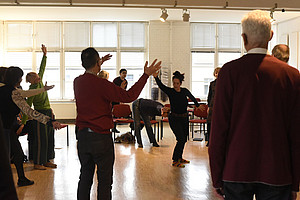
'(Musical) Improvisation and Ethics' is an interdisciplinary, practice-oriented research project funded by the Austrian Science Fund (FWF, grant ZK93). Over a period of four years, the researchers will investigate the improvisational character of ethical behavior using live encounters with musical ensembles as case studies.
| Duration | 2021-2026 |
| Research group | Caroline Gatt (Uni Graz), Joshua Bergamin (Uni Wien), Christopher Williams (KUG). |
| Brief description | The project is based at the Doctoral School for Artistic Research at the University of Music and Performing Arts Graz, the Institute of Cultural Anthropology and European Ethnology at University of Graz, and the Department of Philosophy at the the University of Vienna. |
Glass Works. Taking Roots through Training and Networking
Duration: 2018-2022
Project management University of Graz: Katharina Eisch-Angus
EU partner project, funded in CREATIVE EUROPE CULTURE
Cooperation partners: Bild-Werk Frauenau, Germany (lead partner), the Royal Danish Academy - Copenhagen, Bornholm; Department of Cultural Anthropology and European Ethnology of the University of Graz; associated partners in Germany, Denmark, Austria, the Czech Republic and France.
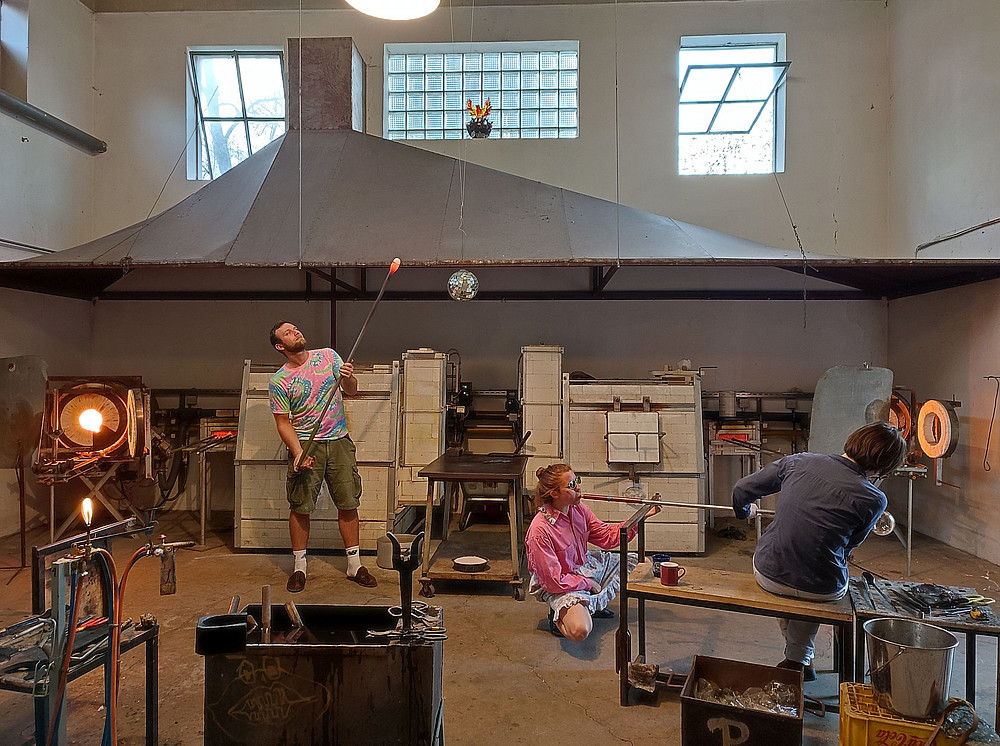
The GLASS WORKS project aimed to bring actors in hand-manufactured and artistic glass in European glass regions, artist-makers, educational and museum institutions, industrial and political stakeholders together in practical and knowledge exchange, and dynamic collaborative networks. At its core is the intention to create new futures for emerging glass makers, to encourage sustainable careers and creative responses to changing societies and globalized markets. Capacity-building extended into creating public awareness of the cultural values of a diverse glass heritage in Europe today. GLASS WORKS implemented these objectives by organizing three 6-months start-up trainings for graduates and young professionals in glass crafts, art and design. An international touring exhibition "Glass Works. European Glass Lives in Craft, Art and Industry", combined with a web portal and ongoing PR and social media activity, created transregional attention. Guided tours, discussion and presentation events, and a conference "Glass Works. Creating Glass Lives" generated manifold inter-European exchange of expert knowledge and experience. Ongoing research and documentation created a shared knowledge base for the envisaged implementation of a permanent European networking platform.
Breaking Art Rules? New clients and the old rules of art
Duration: 2021-2022
Project management: Judith Laister
funded by the Gesellschaft der Neuen Auftraggeber - GNA gGmbH
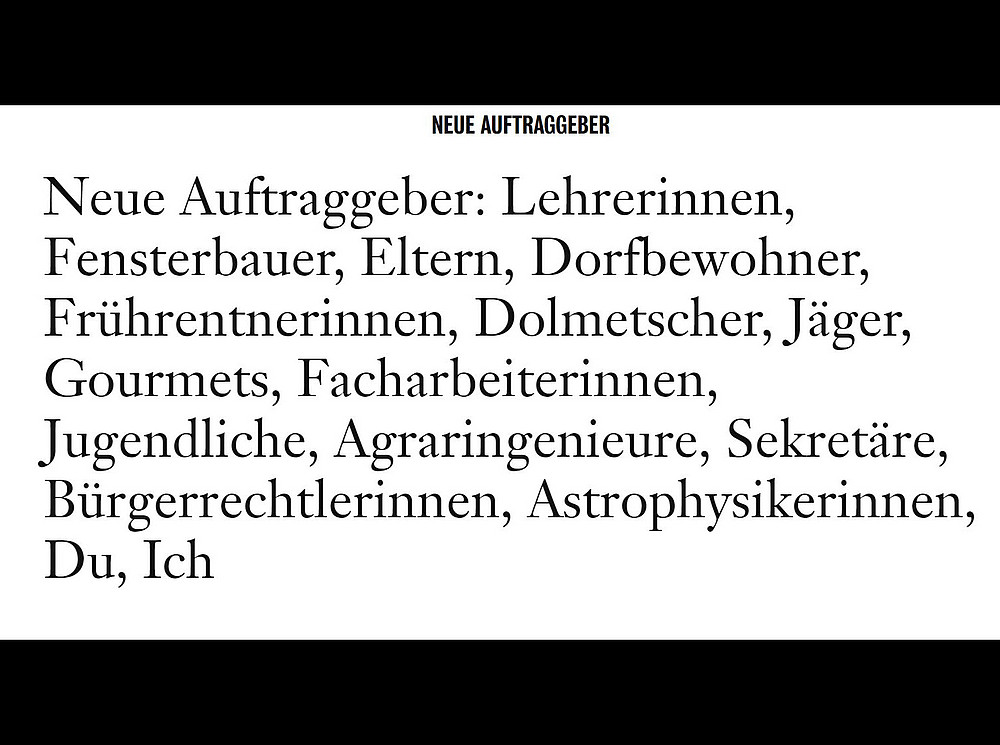
The project "Breaking Art Rules" is based on an understanding of art and the humanities that programmatically aims at social relevance and the strengthening of democratic and participatory processes. In cooperation with the international organization of the "New Patrons", the project is dedicated to a transdisciplinary perspective on the commissioning of art based on civil society: What happens when not the church, state or patrons, but committed citizens act as patrons of art?
Advancing the Value of Humanities - in Academia, Society and Industry
Duration: 2018-2021
Project management: Monika Litscher (Vaduz), Johanna Rolshoven (Graz), Kathrin Wildner (Hamburg)
Funded by the European Commission
At the center of the project is the core task of the humanities to contribute to a better understanding of the complex and intertwined world and to act as an innovative force for change in a sustainable society. The project focuses on new educational impulses and curricula in the field of humanities as well as artistic and technical studies, which enable students in interdisciplinary contexts to develop new perspectives on their subjects and to recognize complex interrelationships. The project addresses three urgent challenges: 1- The perspective need for committed and interdisciplinarily involved humanities in universities and science: How can reflexive knowledge be made fruitful for different scientific fields against the background of humanities theory formation? What kind of training and curricula are needed here? 2- The lack of knowledge about context and critical thinking: How to generate context-oriented and critical knowledge that places the content of "non-humanities subjects" as well as elements of the specific curricula in a historical, philosophical, social, psychological context and provides graduates with a framework for their future professional work? What kind of theoretical and project-based training is appropriate here? 3- The 21st century skills expected of graduates by employers in industry and society are aimed at understanding complex, dynamic and ambivalent transformations and overcoming the challenges associated with them. How to gain insights into unfamiliar cultures, develop emotional intelligence, promote empathy, imagination and understanding, and thus improve graduates' employment prospects in a globalized world and on the job market.
Democracy and peace on the streets
Duration: 2017-2021
Project management: Johanna Rolshoven, Judith Laister, Gerald Lamprecht
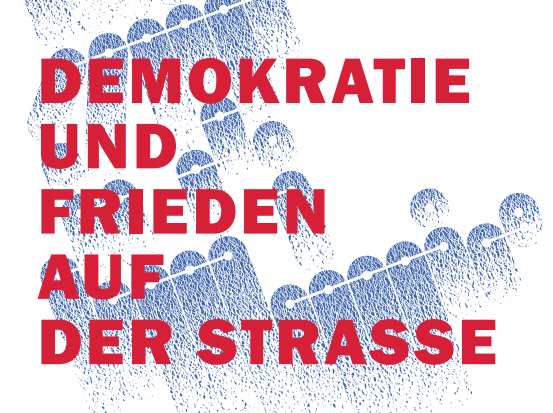
The international conference "Democracy and Peace on the Street" was part of the interdisciplinary art, research and peace project COMRADE CONRADE. It explored the question of how democracy and peace are lived, negotiated and represented on streets around the world. Against the backdrop of the Year of Remembrance 2018, the event examined urban streets from various academic perspectives as a yardstick for political participation, social coherence and everyday conflict resolution. International experts from various cultural and social science disciplines joined artists, students and interested city dwellers to discuss how power relations between genders, generations, institutions, political actors and social groups are visible and challenged in the public space of the street - both historically and currently.
Organic to the power of 3: Traditional knowledge, organic farming and avant-garde lifestyles
Duration: 2017-2019
Project management: Gabriele Sorgo and Helmut Eberhart
Employees: Andrea Heistinger and Elisabeth Kosnik
Project funding: Province of Styria - Office of the Styrian Provincial Government
The research project investigates the central functional characteristics and the knowledge gained from experience of old rural agriculture in order to develop practical principles for future forms of rural production (e.g. Community Supported Agriculture, revival of regional products and production methods). Based on precise historical case reconstructions of individual organic farms in Styria, criteria for a regionally desirable balance between profit orientation and non-market trade (public welfare-oriented and traditional microeconomic practices and lifestyles) will be developed. The Bio3 project refers to three dimensions of the embedding of food and its production processes in the sense of the economic historian Karl Polanyi. It examines the inseparable link between regionally valid and physically bound experiential knowledge (1) and an ecologically and socially caring economy (2) as a prerequisite for sustainable lifestyles (3). Therefore, a further focus is on practices generating and passing on embodied knowledge in order to derive new networks and methods of acquiring agricultural knowledge and thus facilitate the entry of - especially young - people into regional agriculture.
Contentious Images - Unruly Practices. An Ethnography of Visual Protest Repertoires in Southeastern Europe
Duration: 2016-2018
Project management: Johanna Rolshoven, Cultural Anthropology and European Ethnology, Karl Kaser, Southeast European History, Florian Bieber, Southeast European Studies
Doc-Team: David Brown, Angelos Evangelinidis, Marija Martinovic
Coordination: Marion Hamm, Cultural Anthropology and European Ethnology
Recent political mobilizations have been accompanied by an abundance of highly visualised and creative street protests pointing to a new type of networked, culturally inclined social movement. The DOC-team project aims to analyze the visual dimension of contemporary protest in four empirical settings located in Southeastern Europe. The research is guided by two interconnected questions: How is protest visualized in contemporary Southeastern Europe, and why are actors emphasizing visual protest repertoires? The first question aims at processes of meaning-making on the micro-level: how do protest actors link their everyday experiences to the political terrain through 'contentious images' and 'unruly practices'. The second question calls for a wider contextualization of visual protest repertoires. This takes into account discursive arrangements of visual regimes, historical and political conditions, as well as cultural patterns of seeing, acting and interpreting.
These research questions will be approached through four visual ethnographies of distinct visual protest repertoires in urban settings in Southeastern Europe. David Brown draws on recent historical experience to examine contentious public performances by football fans in the region, and their economic ramification. Angelos Evangelinidis explores activist media practices through political posters in Athens (Greece). Marija Martinović studies how the women's movement in Belgrade (Serbia) uses video activism as a performative practice for new subjectivities. The collaboration of the DOC-team benefits from a variety of disciplinary backgrounds, including history, economics, gender studies, political science, and anthropology.
The region of Southeastern Europe is characterized by its peripheral position, a long-term state of transition and high levels of contestation. Examining visual artefacts and practices from the protests that have swept the region in the past years the DOC-team will analyse the historical particularities of the region while also contributing to wider debates on the changing nature of political participation and social change.
Drawing on social movement theory and protest research the DOC-team research adopts a distinctly cultural approach to protest. In this way, the project will contribute to the ongoing scholarly debate on cultural aspects of protest and social movements. Its particular focus on visual artefacts and practices fills an important gap in this field. The introduced concept of visual protest repertoires will connect a central concept from social movement theory to the yet under-researched visual realm.