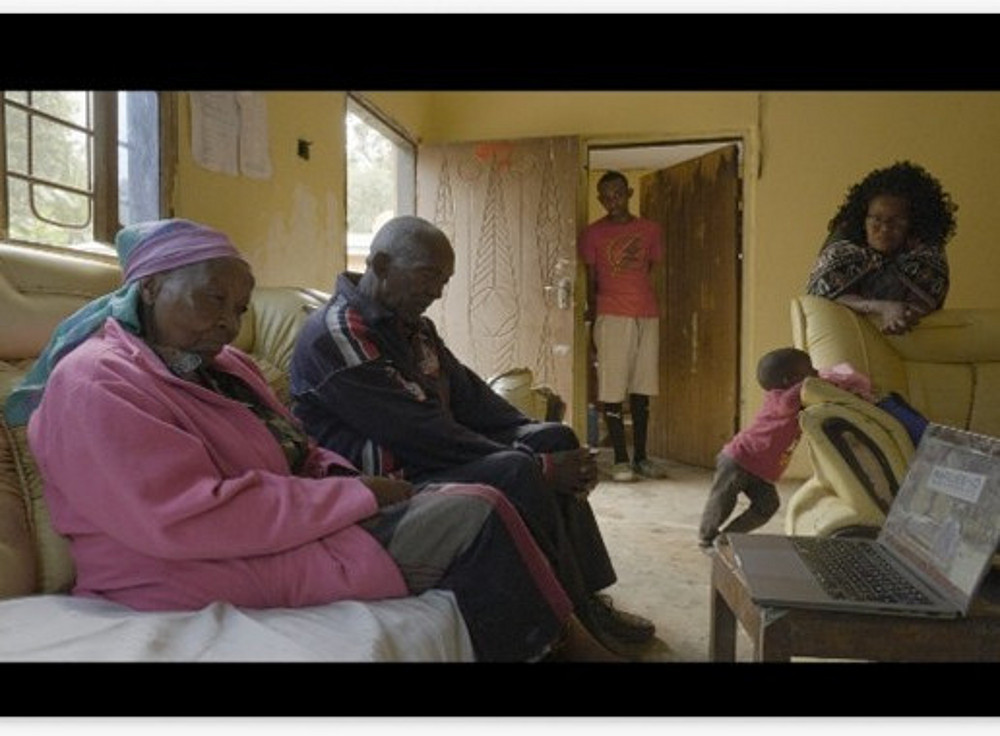
Shared Filmwork explores the possibilities of shared, collaborative, and transcultural filmmaking as a means of dialogue and creative exchange. In this session, Judith Albrecht, Christoph Marx, and Katrine Paahus will present and discuss their ethnographic and collaborative film works created in Tanzania. Their projects engage with local communities through participatory and reflective filmmaking practices. The event invites participants to reflect on how film can become a shared process—where research, representation, and collaboration meet.
Kilochobaki: What Remains
A Multimodal Project about Oral History in Northern Tanzania
Judith Albrecht
One of the most traumatic events in Chagga history in Northern Tanzania was the mass execution on March 2, 1900, when 18 chiefs and leaders were hanged in Moshi for allegedly conspiring against German occupiers. In "Kilichobaki: What remains", we, as German and Tanzanian filmmakers, artists and visual anthropologists, try to approach this concrete historical trauma and understand what role it still plays today. The project started in August 2022 and collectively seeks out local and activist perspectives in the debate over the repatriation of colonial objects. In the process, the film collective reflects on its own blind spots of the divided colonial past through dialogue.
New Hope
A Multimodal Ethnofiction on Collaboration and Representation
Christoph Marx
“New Hope” is an ethnofictional film co-produced by anthropologist Christoph Marx and Tanzanian artist Frank Simplis Kenerd. The film follows a young girl’s struggle to break free from life on the streets, interwoven with a metaphorical fairy tale that reflects societal constraints and moral imaginaries. Blurring the boundaries between fiction and documentary, the work situates filmmaking itself as an epistemic and relational field, foregrounding processes of co-authorship and shared meaning-making. Emerging from the Bagamoyo Film Collective (Bafico), “New Hope” contributes to debates on experimental collaboration and multimodal anthropology by exploring how transcultural film practice can produce situated and reflexive forms of knowledge beyond conventional textual ethnography.
“We Come with Love”
Cutting as Coding and Collaboration
Katrine Chalmer Pahuss
Katrine Chalmer Pahuus talks about her experiences with collaborative editing in Bagamoyo in the fall of 2024. Here, she edited film material with filmmakers Crispina Nazael and Imelder Munyaga, and in this process, they not only cut scenes together, but also developed forms of shared anthropological analysis. These experiences contribute with perspectives on film editing and cutting as a valuable form of coding in anthropology – and one that is open towards many types of collaborations. Making this film is part of creating a dissertation. The film, titled “We Come With Love”, is a portrait of different people affiliated with the Danish Pentecostal church and its missions. It is also a portrait of the many apertures of love, which is created through certain relations and practices that allow both openings and closures of “hearts”.
Judith Albrecht is Incoming Senior Fellow (Elisabeth List Fellowship Program, University of Graz). She is a social anthropologist, visual ethnographer, and curator whose work lies at the intersection of science and committed public anthropology.
Christoph Marx is a Master’s student in Social and Cultural Anthropology at Freie Universität Berlin. His research focuses on audiovisual methodologies within transcultural and collective learning and teaching contexts.
Katrine Chalmer Pahuus is a PhD Student at the School of Culture and Society / Department of Anthropology, at Aarhus University.